The Best Free Piano Libraries
You don't need a $400 library to get world-class acoustic and felt piano tones. Here is how Pianobook and Spitfire LABS deliver character without the price tag.
By GETLOOPS Editorial
4 min read
Piano plugins are one of the easiest ways to blow your music budget on hard drive space you will never use. A massive 80 GB concert grand sounds incredible played solo in a showroom demo, but the moment you drop it into a trap, lo-fi, or indie mix, all that stereo detail and high-frequency shine can end up fighting with your vocals and drums.
The truth is that some of the most characterful, mix-ready pianos available right now do not cost anything. They are not stripped-down demo versions or cheap soundfonts — they are community-driven sampling projects and dedicated artist tools built with tone and mood in mind.
Here are the two free ecosystems that actually earn a permanent spot in a modern producer's template, how they work under the hood, and how to get the most out of them.
1. Decent Sampler + Pianobook: The Open Community Giant
If you have never explored Pianobook, it is one of the most generous archives in music production. Founded by composer Christian Henson, Pianobook is a community-driven repository where hundreds of composers, sound designers, and recording engineers upload custom-sampled pianos for free.
How It Works
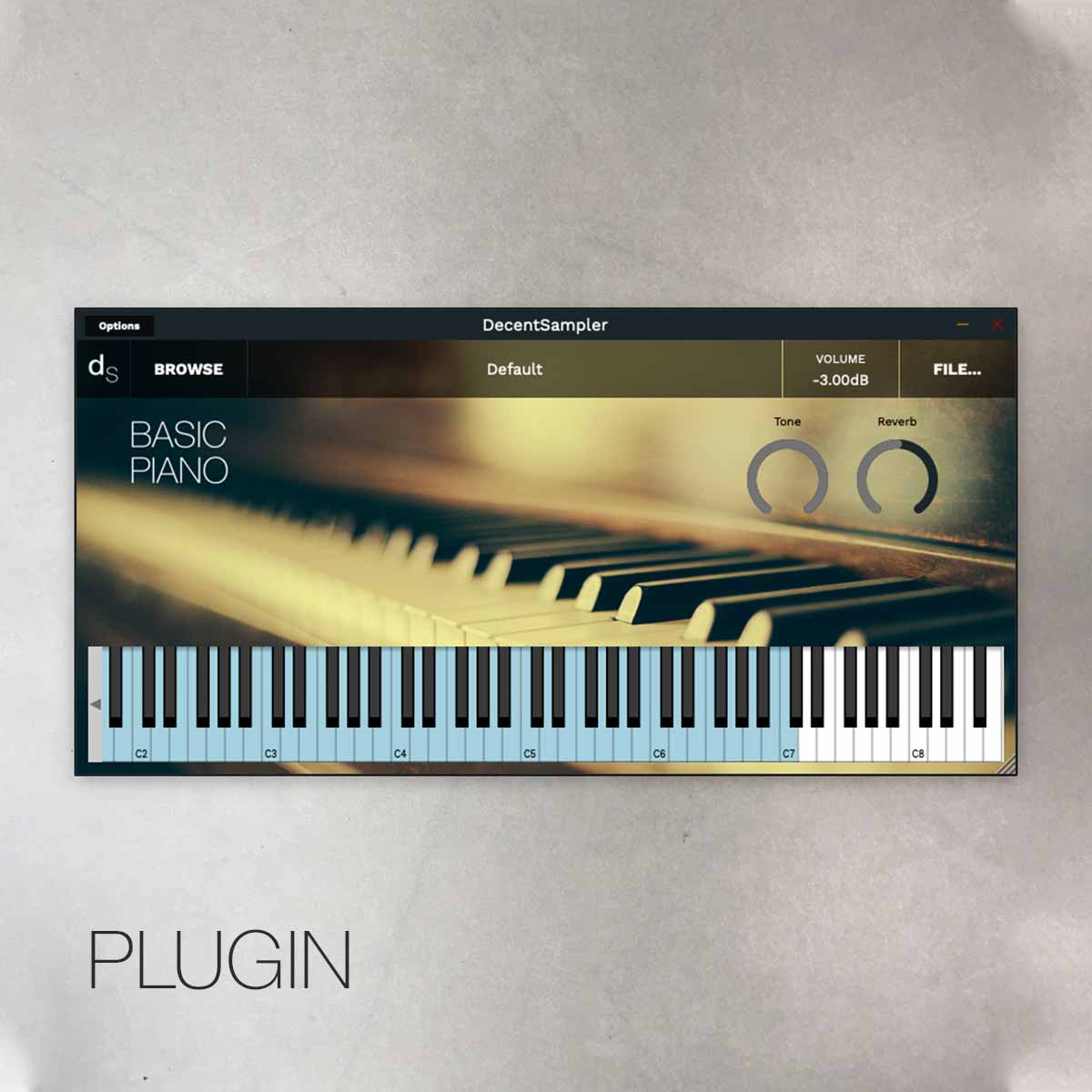
To play these sounds, you use Decent Sampler, a lightweight, completely free sample player developed by David Hilowitz. Unlike closed proprietary players, Decent Sampler runs on an open XML format:
- Ultra-Low CPU Footprint: It loads in milliseconds and consumes minimal RAM compared to heavyweight commercial sample engines.
- Direct Preset Loading: You download the plugin once (VST, AU, AAX, Standalone), grab
.dspresetfiles from Pianobook or Decent Samples, and drag them straight onto the interface. - Built-in Character Controls: Most community pianos come with customized UI controls right on the faceplate: room reverb, hammer release noise, tape warmth, and dynamic filtering.
Standout Sounds on Pianobook
Because Pianobook is made by individual musicians sampling their own living rooms, old uprights, and uprights with literal pieces of felt shoved between the strings, the instruments have distinct imperfections and personality. Look for libraries like the Claustrophobic Piano, 1929 Weber Baby Grand, and the countless character felt pianos tagged on the site.
Best for: Producers who want rare acoustic character, vintage upright textures, and lo-fi warmth that commercial clean grands intentionally scrub out.
2. Spitfire Audio LABS: Effortless Cinematic Realism
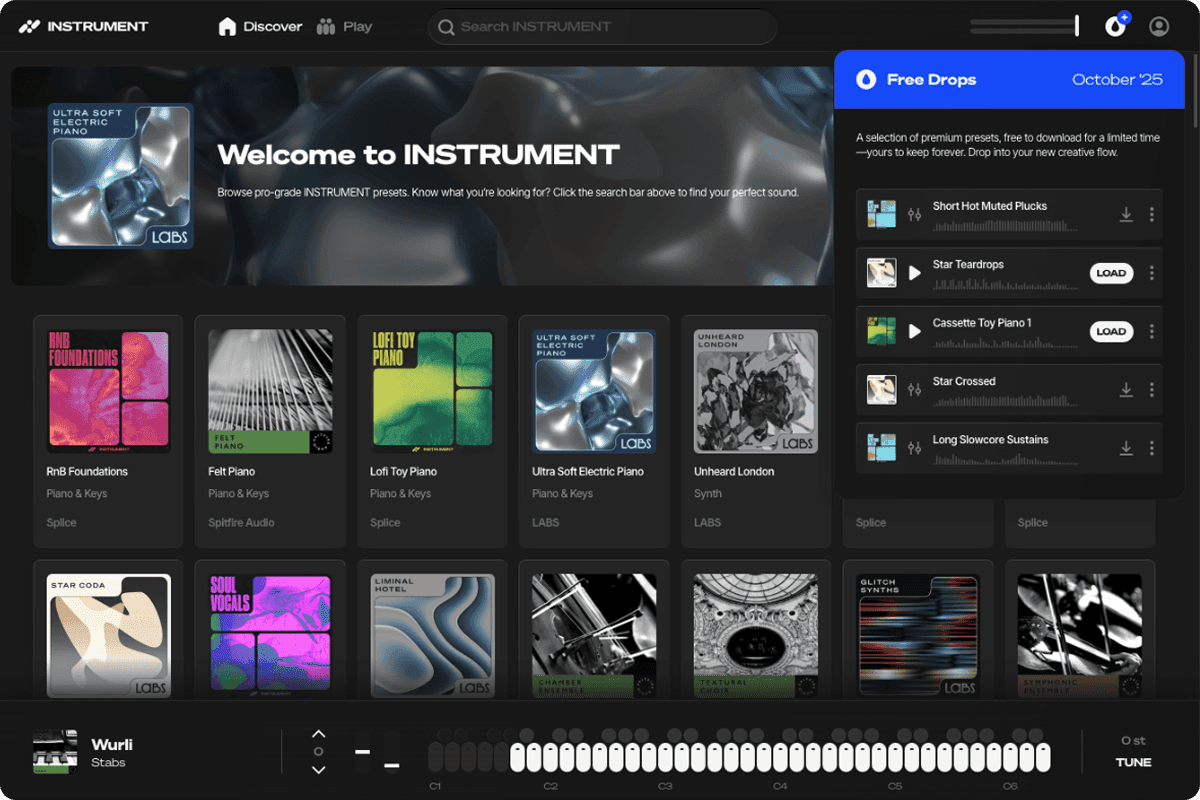
Spitfire Audio is known for scoring blockbusters, but their LABS series is arguably their greatest contribution to independent beatmakers and bedroom producers. LABS is a standalone virtual instrument plugin that houses an ever-expanding collection of free, studio-grade instruments.
How It Works
Spitfire built LABS with minimalism as its core design philosophy:
- Two Main Sliders: You don't have to navigate dozens of sub-menus. The left slider controls Expression (overall volume swell), while the middle slider controls Dynamics (crossfading between soft and hard velocity sample layers in real time).
- The Central Dial: A large, customizable macro knob in the center controls reverb, tone, or chorus depending on the instrument loaded.
- Studio Signal Chain: These are not synthetic emulations; they are multi-sampled takes recorded at legendary facilities like Air-Edel Studios in London and Woodshed Studios in Malibu.
The Key Pianos You Need
- Soft Piano: The undisputed modern classic. Spitfire recorded a Yamaha U3 upright with a thin strip of felt placed between the hammers and the strings, close-mic'd with vintage valve microphones. It produces an intimate, warm, melancholic tone that sits underneath vocals and 808s without requiring heavy EQing.
- Autograph Grand: A pristine Yamaha C6 concert grand captured with natural room resonance, offering a bright, expressive tone suitable for pop ballads, film cues, and melodic trap top-lines.
Best for: Anyone who needs an instantly inspiring, mix-ready piano sound in ten seconds without fiddling with complex microphone mixers.
How to Work with Free Pianos in a Mix
Because free character pianos often include natural room noise, key clicks, and acoustic resonances, keep two practical mix habits in mind:
- High-Pass the Mud: Character pianos often have rich body around
150 Hz - 300 Hz. If your low end is getting cloudy, use a gentle bell cut in that region rather than destroying the low-end warmth with an aggressive high-pass filter. - Automate Dynamics with the Mod Wheel: Both Decent Sampler and LABS respond expressively to MIDI CC1 (Modulation). Automating the dynamic slider during a verse gives your chords human movement and emotional breath.
The Bottom Line
You do not need to spend hundreds of dollars on commercial piano bundles to get rich, emotive keys on your records. Download Decent Sampler for idiosyncratic acoustic character, grab Spitfire LABS for polished cinematic depth, and spend your budget on sounds and tools you actually use.